SUSTAINABLE DEVELOPMENT Knowledge Workspace
A Sustainable Vision on Detention Houses
The question is no longer whether justice is relevant to the Agenda for Sustainable Development,
but how justice systems can actively contribute to achieving it.
JUSTICE AS A PILLAR OF SUSTAINABLE DEVELOPMENT
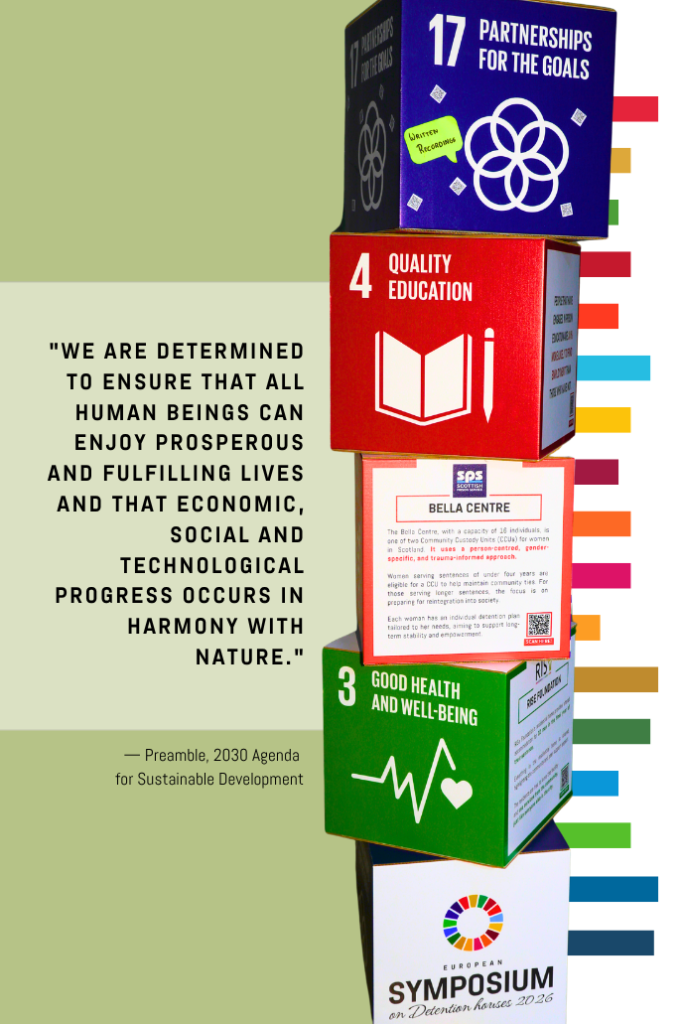
The adoption of the 2030 Agenda for Sustainable Development represented a global commitment to build societies that are more inclusive, equitable and resilient. Through its 17 Sustainable Development Goals (SDGs), the international community recognised that social progress, economic prosperity, environmental sustainability and strong institutions are deeply interconnected. Sustainable development therefore requires approaches that acknowledge the relationships between people, communities, public institutions and the environments in which they operate.
Despite this ambition, one essential public system has remained largely absent from sustainable development discussions: justice. Every year, millions of people experience detention, and the way detention is organised has consequences that extend far beyond the walls of detention facilities. It affects access to education and employment, physical and mental health, housing stability, family relationships, community cohesion, public expenditure and the use of infrastructure. Justice systems therefore do not operate separately from society; they actively shape the social, economic and environmental conditions that underpin sustainable development.
The commitment to leave no one behind necessarily includes people deprived of their liberty. The justice sector should not be considered an isolated sector operating outside broader societal development, but as an integral part of sustainable societies. The question is therefore no longer whether justice is relevant to the SDGs, but how justice systems can actively contribute to achieving them.
a forward-looking approach to deprivation of liberty
A sustainable process of implementation
This Knowledge Workspace introduces a framework for understanding detention through the lens of sustainable development. By demonstrating why justice systems are integral to achieving the Sustainable Development Goals, we can better illustrate how detention houses contribute to the five dimensions of the 2030 Agenda: People, Planet, Prosperity, Peace and Partnership.
What if justice began not in the courtroom, but in the community?
Poverty, trauma, discrimination and social exclusion often shape people’s lives long before they enter the justice system. A socially sustainable justice system recognises this context and seeks to ensure that detention does not deepen inequalities or create new forms of exclusion.
Where and how a sentence is served therefore matters. Detention houses can help people maintain relationships, receive individual support and stay connected to the services they need to build their lives with dignity. Detention houses thereby put the People principle of sustainable development into practice, translating dignity, inclusion and participation into concrete conditions in which detention takes place.
How can detention facilities respect the planet and local communities?
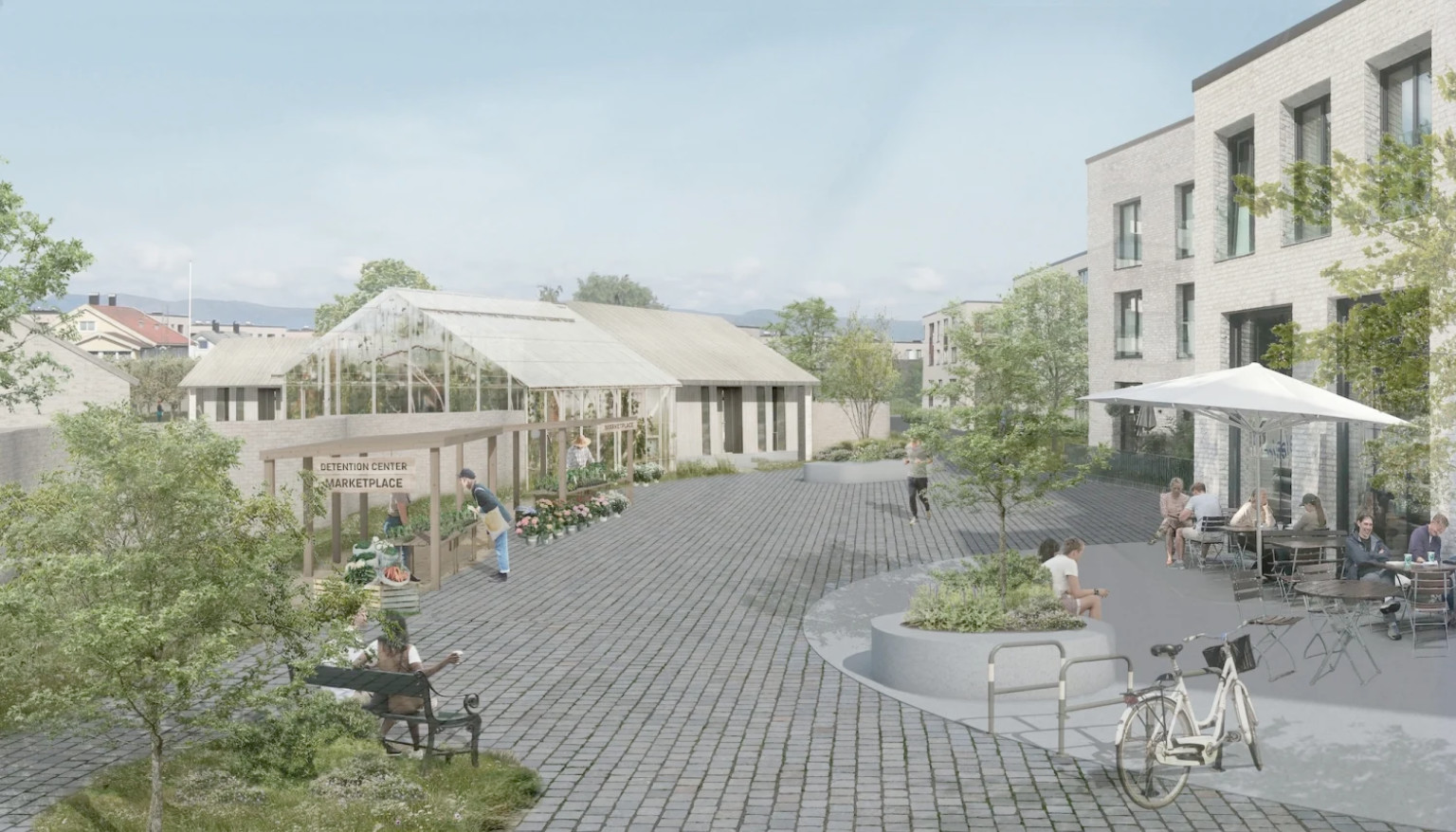
Detention facilities are not only places where people serve a sentence. They are also buildings that use land, energy, water, food and materials. Their location also affects transport needs, access to services and the ability of residents to maintain connections with their families and communities.
A sustainable justice system is therefore not only about what happens in the detention house, but also how it relates to its surroundings. This includes making use of existing buildings and infrastructure, connecting to local services and transport, and considering how detention facilities are part of their local environment.
In this way, detention houses can put the Planet principle of sustainable development into practice, by reducing unnecessary use of land and resources and by making better use of what already exists within communities.
How can detention houses move beyond short-term fixes to become lasting parts of local ecosystems?
Detention can have long-term consequences for work, housing, education, health and family life. A sustainable justice system should therefore not only respond to what happened in the past, but also create the conditions for people to build a stable future and for support systems to continue working over time. This requires a systems approach.
Detention houses need to be embedded in local communities and connected to municipalities, employers, healthcare, housing and other services, rather than functioning as isolated parts of the justice system. When these actors work together, support becomes more continuous, resources can be used more effectively and detention houses can become lasting parts of local social infrastructure.
European movement for Detention Houses
RESCALED & JUSTICE REFORM
Detention houses are not a standalone solution. They are one element of a broader transformation in how society responds to crime. For RESCALED, justice reform means looking beyond detention itself and considering how justice is organised and experienced by individuals, organisations, communities and institutions.
Detention houses can only be effective when they are embedded in a wider ecosystem that connects justice with healthcare, housing, education, employment and community support. Their success depends not only on their scale or location, but also on shared responsibility, collective ownership and the strength of the ecosystem in which they operate.
A SUSTAINABLE VISION ON DETENTION HOUSES
SUSTAINABLE DEVELOPMENT knowledge workspace
Stay tuned for more information coming soon!
Who this knowledge workspace is for
COMING SOON
Why this workspace is different
COMING SOON
Who is involved
COMING SOON
Library of Resources
Utilize our search bar to browse diverse knowledge resources on detention houses and sustainable development. Consult specific reports, articles, presentations etc. To better refine your search, use our advanced filters below!
LET'S CHANGE THE SYSTEM
WOMEN
LIVED EXPERIENCE
SUSTAINABLE DEVELOPMENT
WOMEN KNOWLEDGE WORKSPACE
WOMEN IN DETENTION
STORIES
PRACTICES
SPEAK FOR CHANGE
LIVED EXPERIENCE KNOWLEDGE WORKSPACE
COMING SOON
SUSTAINABLE DEVELOPMENT KNOWLEDGE WORKSPACE
A SUSTAINABLE VISION ON DETENTION HOUSES